
Surviving Orbán: An interview with Hungarian LGBTQ+ activist Géza Buzás-Hábel. (Pt. 3 in a series)
The Pécs Pride organizer reflects on his experiences and political lessons of the past year as he defied Orbán’s ban on Pride and endured right-wing attacks -- until Magyar won Hungary's election.

Note: This story is the 3rd article (in two parts) of my series of field reports from Hungary. It’s also part of a larger comparative 10-country series, What Works to Stop a Dictator: Global Lessons for America. You can read the introductory article on Hungary’s first post-election steps (parts A and B) here; a piece on the future of LGBTQ+ Hungary, and earlier reports from Brazil and Argentina for a comparative view of successful resistance strategies to stop autocracy.
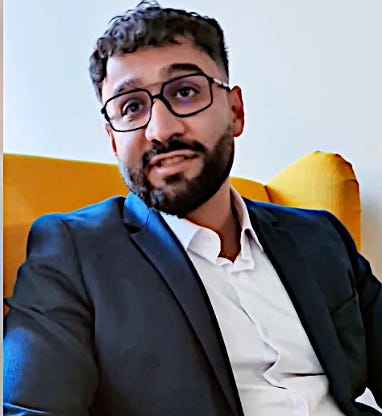
Géza Buzás-Hábel, an outspoken LGBTQ+ and Roma activist, gained global fame and the gratitude of LGBTQ+ Hungarians for defying Orbán’s ban on Pride, at a personal cost: he lost his state-funded jobs and no one would hire him, and he endured escalated right-wing social media attacks. But his actions opened new bridges between Roma and LGBTQ+ Hungarians, and galvanized rural voters in the region close to Croatia’s border.
Photo: ILGA
Introduction:
During the Orbán regime, LGBTQ+ activists and institutions, along with independent journalists and media platforms, became the target of increased suppression, surveillance, and social media attacks by Orbán officials and far-right allies of the regime. Orbán later opened criminal investigations against Pécs Pride organizer Géza Buzás-Hábel, a teacher and well-known Roma and LGBTQ+ activist, who heads the Diverse Youth Network, for defying a September 6 ban on Hungary’s only rural Pride march. Buzás-Hábel faced a year in jail. His case was suspended in late March, as a judicial review of the Pride ban determined if the law was legal or violated the Constitution.
I got in touch with Buzás-Hábel at that time, when tensions were building for the historic April 12 election. He was madly swamped and agreed to a written interview about his personal experiences in defying Orbán to organize Pride and the emotional cost of his actions. Below is a verbatim transcript of his replies, with some minor editing of my questions.
Since Magyar and Tisza’s election victory over Orbán and the far-right Fidesz party, and a rapid overhaul of the judiciary, the charges against are Buzás-Hábel are expected to be dropped. The ban on Pride is anticipated to`be lifted as quickly as the new government can legally do so. Regardless, the Budapest Pride party is on for later June, following a two-week Pride-themed festival leading up the big parade.
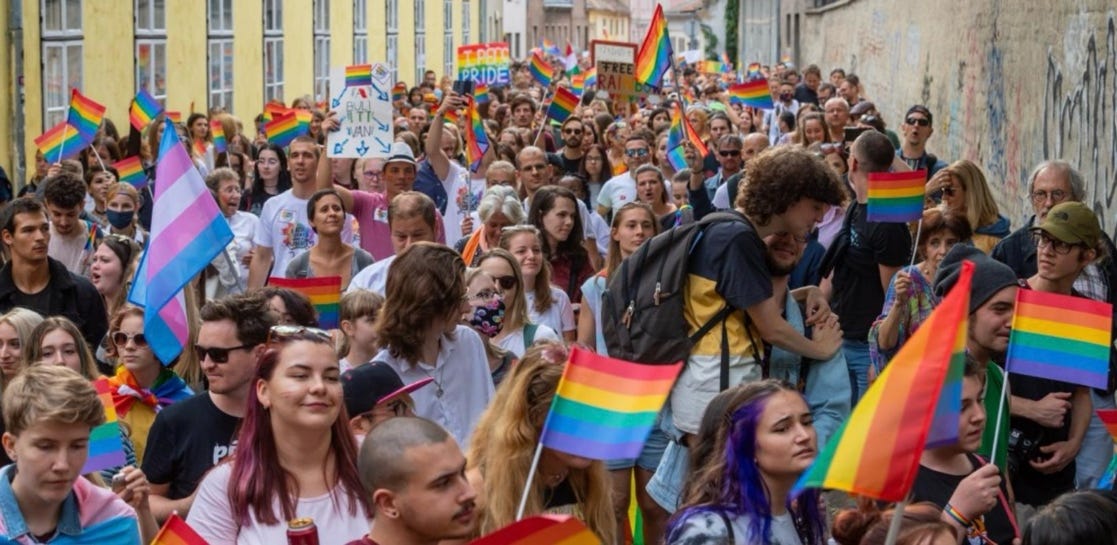
“We will not bow to fear” — we will organize the 5th Pécs Pride even against the official ban,” declared Buzás-Hábel in 2025 in defiance of efforts to shut down LGBTQ+ life in Pecs.
Celebrating a victory over homophobia
Pécs Pride 2026 will be in the fall, and all signs indicate it will be a great celebration, too, one likely to draw more Roma than before, and members of the more-unified local pro-democracy movement. Already, five Roma have been named to parliament to represent Tisza, a historic ascension. Magyar’s incoming government has indicated it will act to improve rights and lives for Hungary’s Roma communities, the country’s largest ethnic minority, and its voice in national affairs.
But that doesn’t mean Buzás-Hábel and other queer and Roma activists won’t continue to suffer attacks by a now-furious, bitterly disappointed far-right sector, including local racist neo-Nazi skinheads who have staged violent attacks on the Roma and gone after LGTBQ+ activists in the wake of the Pride ban. They view Buzás-Hábel as a symbol of everything that is wrong with Hungary, so he’s still a target.
What’s not covered in our Q&A interview are details of how LGBTQ+ activists like him and others in Roma-heavy rural villages worked with Tisza campaign volunteers to counter Orbán’s attempt to bribe citizens to win the election. (I wrote about that in part one of this series.) Orbán-hired thugs — some members of criminal gangs — went so far as to threaten to kidnap Roma children if their community leaders failed to deliver Roma votes for Orbán. Like Buzás-Hábel, Roma activists defied the autocrat, and prevailed over some intimidated conservative Roma leaders, as well as local police, who colluded with Orbán’s buy-the-vote plan.
Before we get to the interview, some additional background is useful …
Organizing to outfox far-right vigilante groups
As I discussed in Part 2 of this series, in March 18, 2025, Orbán made good on his threat to ban Pride and outlaw public LGBTQ+ gatherings by passing a Constitutional amendment that forbids promoting or displaying LGBTQ+ content to minors — the so-called child protection law still on the books as I write. The law also allowed for Orban to use facial recognition surveillance to identify and intimidate Pride participants.
Before that, Orbán also hauled in Budapest Mayor Gergely Karácsony for questioning when he refused to put the kibosh on Budapest Pride there; he was also threatened with a one-year jail sentence. Karácsony made his position clear by denouncing Orbán’s actions at a protest organized by neighboring Vienna Pride activists that took place two days after the Orbán law went into effect, declaring, “If Pride can be banned in an EU member state, then no EU citizen is safe.” Solidarity events were held in other European cities led by Pride organizers.
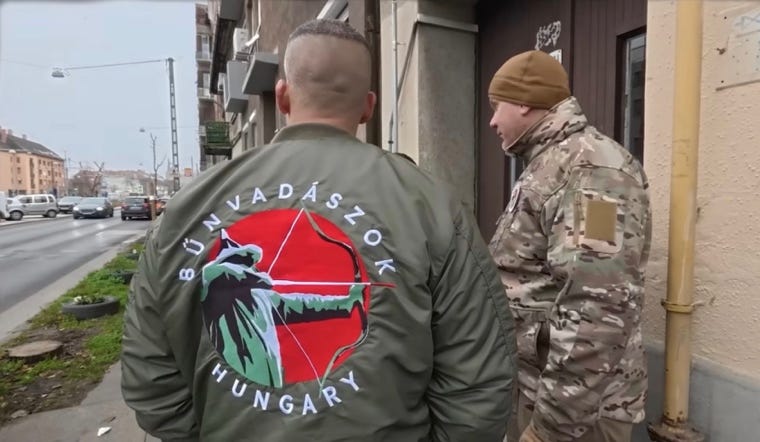
Hungarian and LGBTQ+ and Roma organizers have been followed and attacked by far-right vigilante members of My Homeland Movement, a racist sovereigntist coalition advocating for ethnic Hungarians and opposed to immigration and diversity.
Photo: European Roma Rights Center
Overnight, Buzás-Hábel was thrust into the global spotlight, and he experienced increased online attacks by right-wing allies of Orbán, including members of My Homeland Movement, a racist, self-styled vigilante group. It formed in 2018 as a virulent anti-Roma group later accused of violent attacks against Roma families, and of fomenting hatred against them and other immigrants. The neo-Nazi group has engaged in more anti-LGBTQ+ activities targeting Pride organizers after Orbán passed the so-called child protection law.
Weekly protests across Hungary followed Orbán’s ban on LGBTQ+ identity, content, expression — and Pride
Ten percent of Pécs population of 16,000 is Roma; across Hungary, the Roma live on the social and economic margins and have endured historic persecution and racial discrimination. Roma rights have now emerged as a priority following Tisza’s victory and the critical role played by Roma leaders and voters in traditional rural villages in their11th hour election rejection of Orbán and Fidesz.
As a visible queer Roma activist, Buzás-Hábel has drawn double ire from the vigilante group. My Homeland Movement members have patrolled cities in a van with the words Bunvadaszok on it, which roughly translates as “Fur hunters” — reflecting their mission of tracking and attacking humans, particularly Roma immigrants. They are accused of home break-ins, intimidation, and using physical violence to impose their concept of “justice” against immigrants that they brand as “squatters.”
Across Hungary, LGTBQ activists began organizing protests to the Pride ban that drew hundreds to thousands of participants. One politician, the independent parliamentarian Ákos Hadházy, organized a weekly protest between March 25 and July 19, 2025. Buzás-Hábel got legal support from the Hungarian Civil Liberties Union, the Hungarian Helsinki Committee, Amnesty International Hungary, and the Háttér Society; he also declared his intention to taking his legal case and the ban on Pride to the European Court of Human Rights at Strasbourg if needed. Almost 200,000 people from over 30 countries, including some 70+ European Union officials, joined Budapest Pride last June 28; 23 embassies and over 20 EU countries also issued statements in support of Pride and LGBTQ+ rights.
In Pécs, Amnesty International joined local LGBTQ+ activists in a protest of the Pride ban on March 19, the day after the 2025 ban went into effect; the rally drew 200 people, including members of the centrist Momentum Movement. A legal appeal of the ban failed when it was upheld the Curia, Hungary’s Supreme Court. Citizens also directed letters of protest to Dr. István Takács, Chief Prosecutor at the District Prosecution Office of Pécs, demanding the regime drop its investigation of Buzás-Hábel. European and other global LGBTQ+ human rights groups also piled on the pressure. A legal defense team also offered Buzás-Hábel topnotch representation to fight the case.
The personal costs of defying Orbánism
A teacher, Buzás-Hábel lost both his state-funded jobs after Orbán officials put pressure on the institutions. He was unable to secure work because people felt too scared of the repercussions of hiring him; at the time of our interview, he had a temporary position filling in for colleague on leave. His financial situation was difficult.
But he drew got strong support from academic colleagues at both institutions where he’d been working. In Pécs, individual members of his traditional Roma community denounced the attacks against one of their own, though some Roma-led institutions who depended on state funding stayed mum.
On the positive side, his case created an opportunity to build bridges between conservative Roma residents and LGBTQ+ activists and educators, as well as members of other sectors who united in local opposition to Orbán. It also created schisms between Roma community members. In recent years, more Roma have fled their homes and war in Ukraine to temporarily resettle in Hungary. In his election campaign, Orbán warned Hungarians that Peter Magyar and Tisza would lead the country to war, and cast the pro-democracy opposition movement as the puppet of the EU. Far right groups warned of a flood of more Ukraine refugees if Magyar defeated Orbán. They view the Roma as part of a non-ethnic refugee wave that threatens white European identity and must be stopped.
During this difficult period, Buzás-Hábel also worried about the impact of the attacks on his organization, Diverse Youth Network. But the board and staff of the organization stood firm, supporting him and stepping up to lead a defiant response to the state’s repression. Local community members stepped up to support the group.
Pro-Pride organizers collected 25,000 signatures demanding that the local police protect Pride goers; the police refused to accept the petition. Instead, some local police took pictures of people publicly promoting Pécs Pride, an act of intimidation. At the regional and municipal level, progressive left and pro-democracy activists backed Pride, including Pécs independent mayor Attila Péterffy, who headed the local opposition coalition, Pécs jövője — the future of Pécs.

Far-right white supremacy vigilante groups have targeted and intimidated Roma communities, driving around in their signature van with the words Bunvadaszok — “Fur hunters” on it. They’ve faced accusations of terrorism, but, underOrbán, critics say local police in some areas tolerated their racist and anti-LGBTQ+ campaigns.
Photo: Photo: European Roma Rights Center
Police provided anti-Pride vigilante groups with permits to counter-protest
That contrasted with police support given to far-right groups, including members of Citizen Go, a Spain-based regional far right network, and My Homeland Movement. they held smaller counter-protests in advance of Pécs Pride; the leader of My Homeland Movement, Tamás Varga, obtained police permission to stage five counter-demonstrations at points along the Pécs Pride parade route. Most drew a dozen or so anti-LGBTQ+ protesters, but one event at a railway station drew one hundred participants.
On the day of Pécs Pride, October 4, six far-right youth activists from the anti-immigrant, pro-sovereigntist group, Sixty-Four Counties Youth Movement (Hatvannégy Vármegye Ifjúsági Mozgalom, or HVIM). They attempted to block the Pride march with a banner declaring “Stop LGBTQ+” until about twenty police intervened to stop them. HVIM advocates are a white supremacy group that support the unification of ethnic Hungarians into Greater Hungary and have been linked an alleged far-right terrorist incident.
The HVIM youths stood little chance of holding back a record 8000 people who marched in Pécs Pride, despite threats of heavy fines and security surveillance directed against Pride attendees. Pride organizers used stealth: they kept parade route secret from the police until the day before, and revealed a different rally location — strategies to keep the far-right vigilante groups from stopping them. Attendance marked a big jump over prior years and included a spike of solidarity from rural Roma residents.
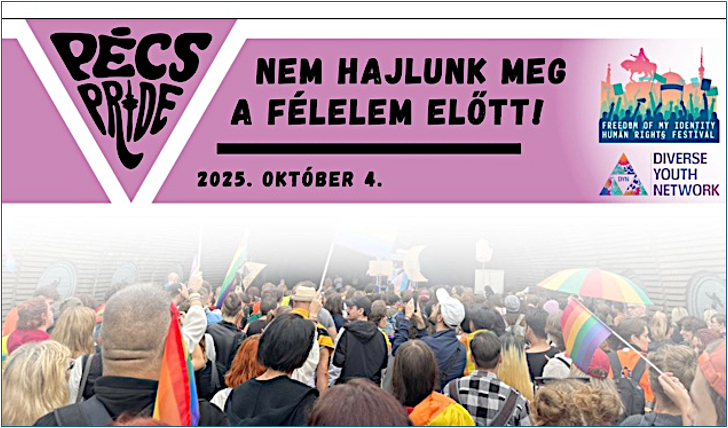
Photo: RosaLila PantherInnen
Pre-election tensions were high in rural areas
A caveat: The mood in Hungary when I contacted Buzás-Hábel was cautiously optimistic that the opposition candidate, Peter Magyar, leader of the Tisza party, would prevail. But Hungarians had just learned that Orbán’s team was implementing a buy-the-vote bribery campaign aimed at rural villages and notably, Roma communities, and that a Russian intelligence team had been tasked with helping to swing the vote to Orbán. That raised political tensions in Pécs and within Roma communities.
Since the election, everything has changed and the mood is celebratory. Both LGBTQ++ and Roma activists are seen as the spear of a broad pro-democracy movement that successfully reversed Orbán’s illiberal reign. The interview responses below reflect Buzás-Hábel’s feelings while the danger and pressure remained very great. He was weighing the possibility of an intensified crackdown on both the local LGBTQ+ and Roma community if Orbán prevailed. And while his case had been suspended pending a judicial review of the legality of the ban, Orbán loyalists sat on the highest court, so he was being forced to consider the real possibility of being imprisoned. — AC
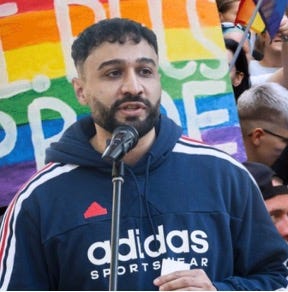
Born into a traditional and working-class Carpathian Roma family near the Slovak border, Buzás-Hábel struggled with depression and lack of community acceptance after coming out in his college years. He credits his grandmother and female Roma elders as role models of strength.
Photo: ILGA
Confronting Orban: My Q & A with Géza Buzás-Hábel
ACD: Where were you born and raised? Do you have any siblings? Could you tell a little about your family — what did your parents do, and were they traditionally religious or rather liberal in their beliefs? Is there someone in your (extended) family you consider a role model in terms of your values — such as standing up for yourself, defending your personal freedom, or resisting authoritarianism?
GB-H: I come from a small village in northern Hungary called Buják, near the Slovak border. I grew up as the eldest child in a Carpathian Romani family; I have two younger brothers, one [who is] one year younger than me, and the other, two years younger. My parents earn their living through manual work: my father is a construction contractor and mason, and my mother works as a cleaner.
During my childhood, my grandmother played a particularly important role in my life. In many Romani communities, it is common for grandparents to take an active part in raising the first child. Because tradition usually dictates that the woman moves to the husband’s family after marriage, in my case it was my paternal grandmother who spent the most time with me. From her I received the strongest foundations of my Romani identity, as well as my connection to the Romani language.
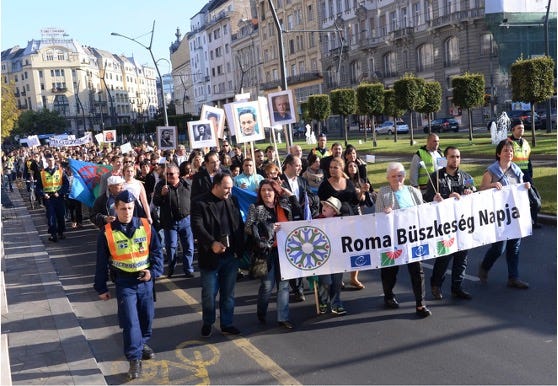
Roma communities in Hungary have faced historic persecution, racism, and institutional discrimination. Above, a 2017 “Roma Pride Day” march through Budapest.
Photo: Attila Kisbenedek | AFP via Getty Images
My grandmother was an exceptionally brave and pioneering woman for her time. She was the first Romani woman in the village to obtain a driver’s license at the age of fifty. When I was a child, this was far from ordinary: women generally had far fewer opportunities and freedoms, and driving was considered particularly unusual for them. Strong female role models were present in our family even earlier.
My great-grandmother — my grandmother’s mother — was also an extraordinarily charismatic and resilient woman. She raised her two children alone while doing physically demanding labor: as a woman, she worked in an iron foundry. Through her tireless work, she managed to create financial security for her family and passed on values that influenced us for generations.
ACD: Regarding your activism, when did you first identify as LGBTQ+? Did you receive support or opposition from your family or community?
GB-H: Already in childhood I felt that I was somehow different from others, but I only began to think about this more consciously toward the end of high school. The real turning point cameduring my first year at university, when I was finally able to accept myself. The city of Pécs also played an important role in this process — the more open atmosphere of the city and the environment where I could finally reflect more freely on myself and my identity. I was around twenty years old when I eventually came out to my family.
When I came out, I did not receive explicit support from my family. There were small gestures that suggested some degree of openness, but overall the first period was quite difficult for me. Surprisingly, my father accepted the situation more easily than my mother. For my mother, it was particularly challenging: she struggled with deep depression for nearly five years, partly connected to the emotional process surrounding my coming out.
Later, when I was in a serious relationship that lasted seven years, I introduced my partner to my family and brought him home to Buják. They were personally kind and welcoming toward him, which meant a lot to me. At the same time, they were not ready to openly acknowledge our relationship in front of the wider community or extended family. When we visited together, my family would introduce him as my colleague.
I still experience a similar kind of duality today. For example, during Pride-related events I have appeared quite frequently in the media, and many of these appearances were visible to my family as well. Yet they have almost never asked me what exactly I do — what this work means to me, or shown public support — even through something as simple as sharing a post or liking something online. This can sometimes be painful for me, but I also feel that my family and relatives genuinely struggle to understand what it is that I do.
Part of this is also because I am the first person in my family to earn a university degree. In itself, this creates a certain distance between our experiences and the worlds we inhabit. Because of this, not only my identity but also my professional work and public engagement can be difficult for them to interpret. Traditional gender roles are also strongly present in many Romani communities.
If we add my family’s social background — coming from a working-class environment—it becomes even more understandable why accepting or even interpreting LGBTQ+ identities can be difficult for them. In this context, these issues rarely appear openly, and there are often few social or cultural reference points that could help people understand these identities. And of course, the political propaganda that currently dominates in Hungary also reinforces the already conservative views present in my family.
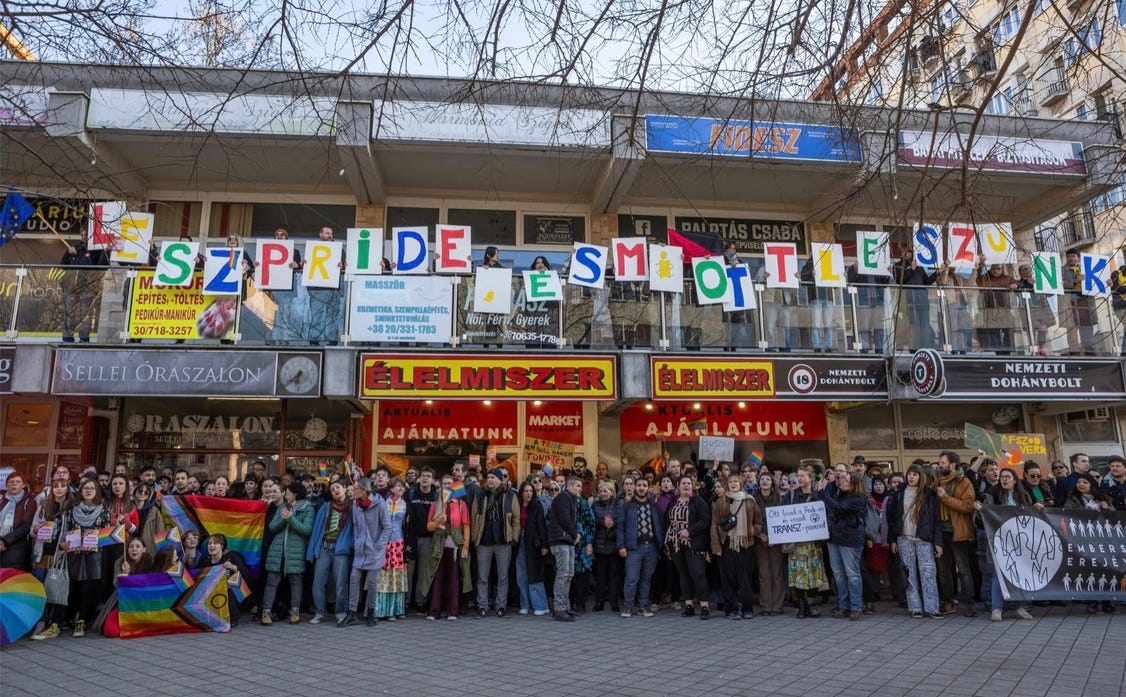
Diverse Youth Network has led Hungarian rural LGBTQ+ organizing, and worked to create an intersectional coalition to support Pecs Pride and mobilize against right-wing attacks on Roma families, too. Four of its seven board members are women.
Photo: Diverse Youth Network
A focus on intersectional organizing among vulnerable communities
ACD: When did you start working with the Diverse Youth Network? Who are the other key leaders? Could you describe this group, its current membership, and its advocacy priorities? What kinds of oppression had your group or its members faced prior to your legal case?
GB-H: The Diverse Youth Network was founded in 2017 together with Roma friends from university. We all came from the same academic college environment. I know that the institution of a szakkollégium (vocational college) is quite specific to Hungary and does not really correspond to American student houses. Essentially, it is an academic community of students and faculty organized around a particular field of study: members conduct research together, organize professional workshops and forums, while also building a strong community life. Our college was organized around Romani studies and consisted mainly of Roma students.
This environment was extremely inspiring and motivating for us. As we approached the end of our university studies, however, we began to ask ourselves how we could continue this kind of intellectual and community collaboration beyond the university. We felt that the most suitable framework for this would be the creation of a civil society organization. That is how the Diverse Youth Network was born.
It was important for us not to create a traditional Roma organization. Instead, we envisioned a group built around human rights education, social and cultural communication, and advocacy. We also deliberately avoided becoming a conventional Roma organization because we often observed that many Roma organizations operate in a rather closed way, focus on a narrow set of traditional issues, and rarely apply an intersectional perspective. At the same time, among majority-led so-called pro-Roma organizations there is often a kind of ‘glass ceiling’ that limits the genuine participation and leadership of Roma youth.
In contrast, we wanted to build an organization that provides a platform for different marginalized communities and allows them to articulate their own stories and narratives. Another important experience for us was that prejudices often exist even between minority and marginalized communities themselves. For this reason, one of our core goals became what we call “cross-sensitization”: fostering a more solidaristic community that is sensitive to the problems faced by others. These principles still define the organization’s work and priorities today.
Currently, our general assembly has twenty-seven members, four of whom carry out the executive and operational tasks and manage the day-to-day functioning of the organization. I serve as the director of the organization; we do not have a traditional presidential role, and strategic decisions are made collectively by the general assembly.
However, the independent civil sector in Hungary has extremely limited access to funding. The grants that are available are often so small that they do not allow organizations to maintain paid operational or leadership positions. As a result, we have all been running the organization on a voluntary basis — continuously since 2017. Despite these constraints, we have managed to establish several significant programs over the years. This year we organized the fifth ‘Freedom of My Identity Human Rights Festival,’ as well as Pécs Pride.
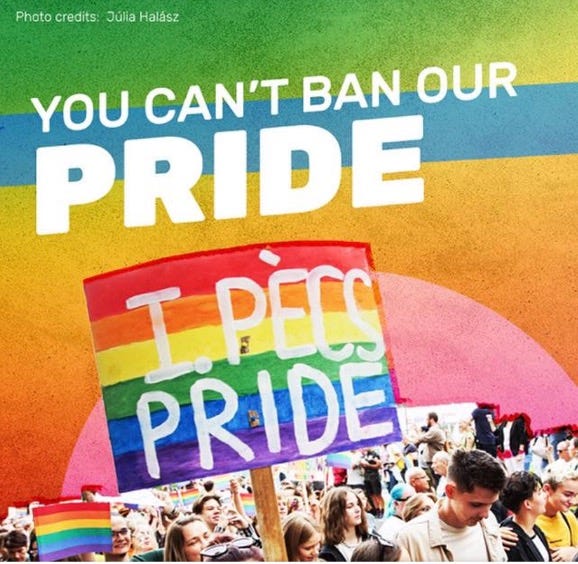
Photo: Júlia Halász
ACD: Why did you decide to organize Pécs Pride? In a YouTube interview circulated by ILGA Europe, you said that you decided to organize Pécs Pride after Orbán banned it, among other reasons because: a) you wanted to amplify the voice of the local LGBTQ+ community; and b) it was important to defend civil liberties and the freedom of assembly — democratic principles; and c) it is important for Hungary to remain in the European Union and support EU values and policies, which are more liberal than Hungary under Orbán.
SBH: Pécs Pride is particularly important for us because it was the first Pride march ever organized outside the capital in Hungary. Since 2021, no other rural city has organized a Pride event, which gives this initiative special significance. It is also important to emphasize that in our case Pride does not appear as a standalone LGBTQ+ event, but rather as the closing event of the broader Freedom of My Identity Human Rights Festival. The festival itself is not exclusively about the LGBTQ+ community; it is an inclusive human rights platform that gives space to various marginalized and minority groups.
Our aim is to create dialogue and cooperation between these communities—in. essence, a genuine process of alliance-building. I believe that this intersectional approach and the solidarity between communities is one of the greatest strengths of our organization.
As the director of the only organization that organizes a rural Pride in Hungary, I naturally felt a strong responsibility not to legitimize such an oppressive decision, nor the broader process represents the rollback of European values. For me, not organizing Pride was never a real option. It would have meant abandoning my community and betraying myself. Of course we want Hungary to remain a member of the European Union, and we are committed to building a democratic Hungary. And in that effort, nothing and no one will stop us — or me.
END of part A of this interview; Q& A interviw continued in Part B.
Will you help us share this update?
Thank you for reading. Do let me know what you think! I know these articles are long reads, and I hope you appreciate the deep dives and comparative country lessons they offer, and practical insights. I’ll summarize those at the end of this Hungary series.
I invite you to restack this article and share the link to it on your social media.
Finally, I want to welcome new subscribers who joined in the past two weeks and thank those of you who committed to a paid subscription. I’m deeply appreciative, since I’ve taken on the field reporting for this series without any institutional or funding support. You paid subscribers are helping to support this reporting.
I’m offering a steep discount to the global series here — 58% off — so if you can afford to support this work that way, it’s deeply appreciated. I will continue to keep the contents of this newsletter free given the importance of sharing what works against authoritarianism in these difficult times. — Anne-christine